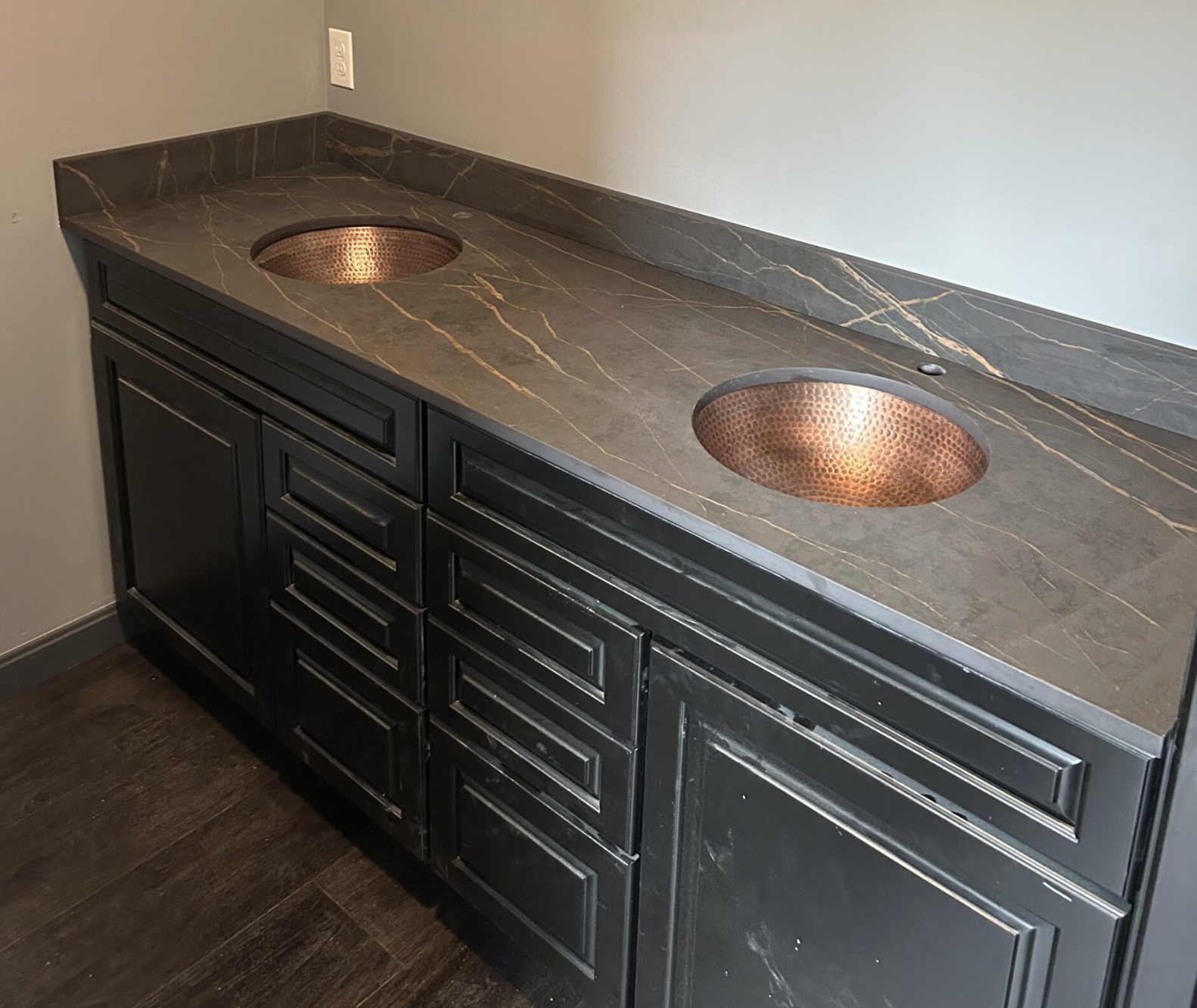
Porcelain countertops are made from a blend of refined natural clays, minerals, and other raw materials that are finely ground, mixed, and pressed under high pressure. The material is then fired at extremely high temperatures, creating a dense, durable, and non-porous surface. Advanced manufacturing techniques allow porcelain slabs to be produced in a wide variety of colors, patterns, and finishes, including realistic interpretations of natural stones like marble and granite.
Why Porcelain?
Porcelain countertops are a versatile and durable choice for modern kitchens, bathrooms, and other living spaces. Unlike natural stone, porcelain is a manufactured material made from refined clays and natural minerals that are pressed and fired at extremely high temperatures. This process creates a dense, hard surface that can be produced in a wide variety of colors, patterns, and finishes, including designs that beautifully replicate the look of marble, granite, and other natural stones.
Porcelain slabs are available in a variety of thicknesses, with 12mm (approximately ½-inch) and 20mm (approximately ¾-inch) being common options for countertops, depending on the manufacturer and application. Porcelain is highly resistant to scratching, staining, heat, moisture, and UV exposure, making it an especially versatile material. It is also non-porous and does not require sealing, allowing for easy everyday maintenance with mild soap and water. Porcelain can be available in polished, matte, textured, and other specialty finishes, offering flexibility for a wide range of design styles. Its resistance to UV exposure also makes certain porcelain slabs an excellent option for outdoor kitchens and entertaining spaces. With its durability, low maintenance, and extensive design possibilities, porcelain is a practical and stylish choice for both indoor and outdoor applications.