
Soapstone is a natural stone known for its rich color, soft feel, and timeless character. It is quarried in several parts of the world, including Brazil, Finland, India, and the United States. Each slab of soapstone is naturally unique, with variations in color, veining, and mineral movement that give every countertop its own character. Soapstone typically ranges from shades of gray, charcoal, and black, and its color can deepen and develop a beautiful patina over time.
Soapstone countertops are commonly available in a 1¼-inch thickness and can be finished in different ways, including honed and leathered, with a smooth, natural matte appearance being especially popular. Unlike many natural stones, soapstone is non-porous, making it highly resistant to staining and moisture and an excellent choice for kitchens. It is also naturally heat-resistant, allowing hot cookware to be placed on the surface without the same concerns associated with many other countertop materials. Because soapstone is softer than granite and quartz, it can be more susceptible to scratches and small nicks; however, these can often be sanded out or left to contribute to the stone’s natural character. Periodic application of mineral oil can be used to deepen and maintain its color, although it is not required for the stone’s performance. With its durability, heat resistance, and distinctive aging process, soapstone is a beautiful choice for both traditional and modern kitchens.
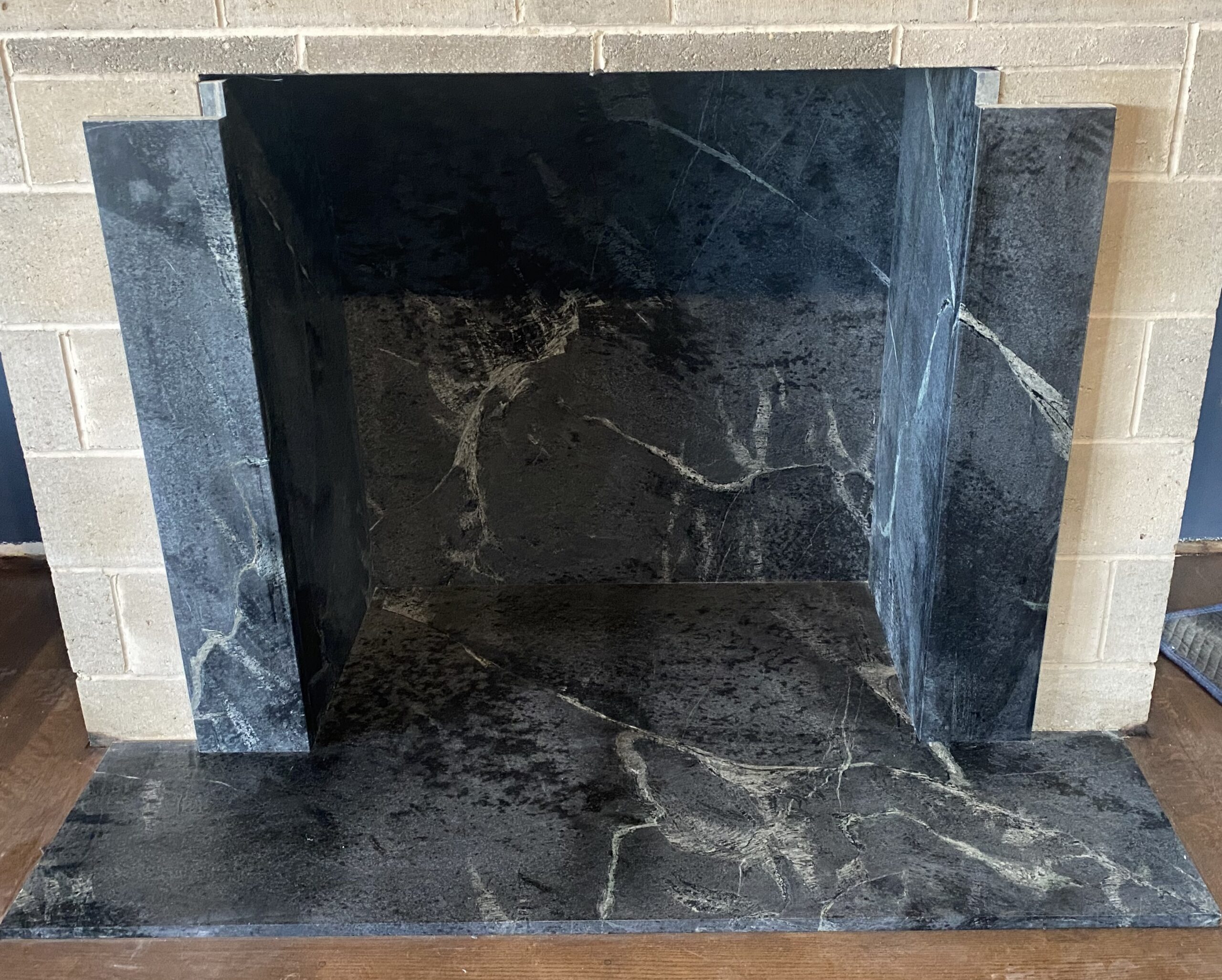
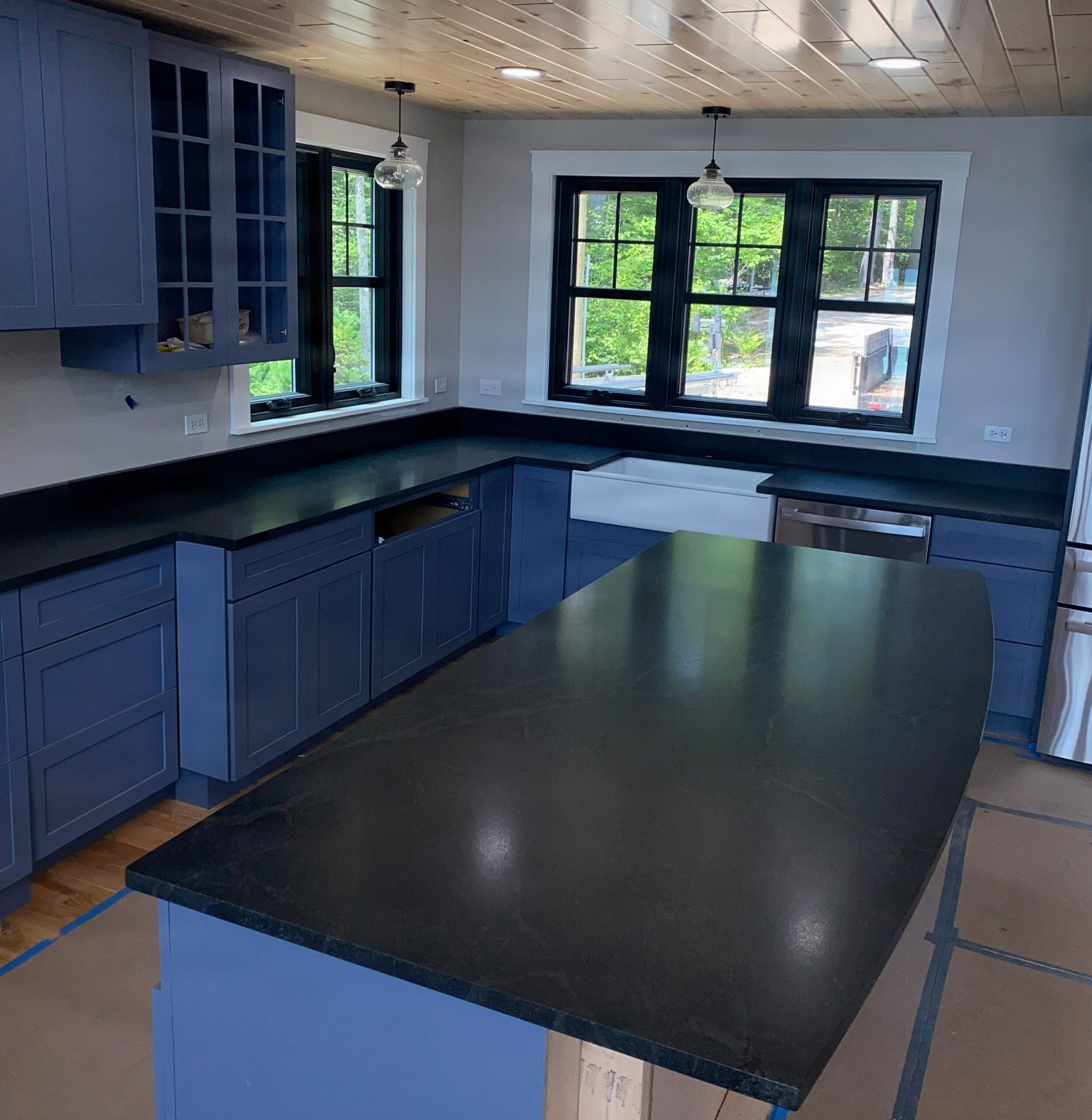
Soapstone is a natural metamorphic stone formed deep within the Earth over millions of years. It develops when mineral-rich rocks are exposed to intense heat and pressure, causing them to transform into a dense stone made primarily of talc, magnesium, and other minerals. The amount and type of minerals present influence the stone’s color, veining, and overall character. This unique geological process gives soapstone its naturally soft, smooth feel, distinctive appearance, and excellent resistance to heat and moisture. Once quarried, the stone is cut and finished into slabs, with each piece showcasing its own natural variations.